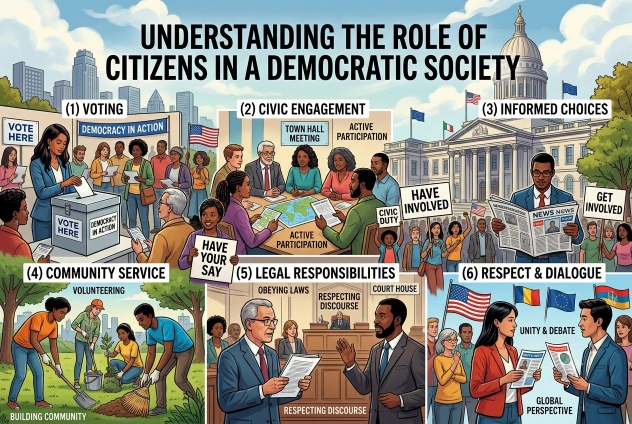
A democratic society depends not only on government institutions but also on the participation of its citizens. Voting is one important form of participation, but civic involvement can extend much further. Citizens can stay informed, communicate with public representatives, participate in community organizations, provide feedback on public policies, follow government decisions, and contribute to discussions about issues affecting their communities.
The OECD describes citizen participation as extending beyond elections and notes that participation in policy and service design can support transparency, accountability, and democratic decision-making.
Voting and Representation
Voting provides citizens with a formal way to participate in representative government. Through elections, eligible voters select representatives or participate in other electoral processes according to the rules of their political system.
However, civic participation does not end when an election is over. Citizens can continue to monitor representatives, understand public decisions, and communicate their concerns throughout an elected government’s term.
This ongoing engagement connects elections with broader democratic participation.
Staying Informed
An informed citizen is better positioned to understand public issues and participate meaningfully in civic discussions.
Reliable information can come from official government documents, legislative records, public reports, reputable journalism, and other credible sources. Comparing information from multiple sources can also help people identify differences between factual reporting, analysis, and opinion.
This is particularly important online, where information can spread rapidly and may lack sufficient context.
Understanding Rights and Responsibilities
Citizens generally have rights and responsibilities established by the legal and constitutional framework of their country. These may include rights related to expression, association, participation, and access to public institutions, alongside responsibilities such as following applicable laws.
The precise rights and duties vary by jurisdiction, so citizens should refer to the laws and institutions applicable to their country or locality.
Understanding these frameworks helps people participate more effectively in public life.
Participating in the Community
Civic participation can take many forms outside formal political institutions. Community organizations, volunteer groups, neighborhood associations, advocacy organizations, and local initiatives can all provide ways for people to contribute.
The OECD identifies activities such as voluntary associations, grassroots movements, advocacy organizations, community services, and networks as forms of civic participation.
Community participation can be especially relevant to local issues such as public spaces, transportation, education, environmental concerns, and neighborhood development.
Communicating With Public Officials
Citizens can communicate with elected representatives and public agencies about issues that affect them. Depending on the jurisdiction, this may happen through letters, emails, public meetings, consultations, petitions, or other formal channels.
Constructive communication is generally more useful when it clearly explains the issue, provides relevant information, and identifies the specific outcome or concern being raised.
Taking Part in Public Consultations
Some governments invite citizens and stakeholders to provide feedback on proposed policies, regulations, development plans, or public services.
Participation in these processes can provide policymakers with information about people’s experiences and concerns. The OECD’s guidance emphasizes that meaningful participation can contribute to more inclusive and informed policymaking.
Citizens can make better use of consultations by understanding the proposal, reviewing available evidence, and providing specific feedback.
Holding Institutions Accountable
Democratic participation also includes paying attention to how public institutions operate. Citizens can follow government announcements, budgets, public projects, service performance, and policy implementation.
Transparency and access to information can make it easier for citizens and civil society organizations to understand government activity. The OECD identifies access to information, civic freedoms, media freedom, and opportunities for participation as important elements of civic space.
Respecting Different Viewpoints
Democratic societies include people with different experiences, priorities, and opinions. Civic discussion can therefore involve disagreement.
Constructive democratic participation does not require everyone to reach the same conclusion. Listening to different perspectives, checking factual claims, and distinguishing disagreements about values from disagreements about facts can make public discussions more productive.
Responsible Online Participation
Digital platforms have created new opportunities for civic engagement. People can discuss public issues, access government information, join community groups, and communicate with organizations online.
At the same time, online information can include misinformation, manipulated content, or claims presented without sufficient evidence. Careful verification before sharing information is therefore an important part of responsible digital participation. The OECD identifies disinformation as one of the pressures facing contemporary democracies.
Young People and Civic Participation
Young people can participate in civic life in many ways, including volunteering, community projects, educational activities, public discussions, and other forms of engagement. Some formal political activities may have age requirements, but civic involvement can begin well before someone becomes eligible to vote.
Giving younger people opportunities to understand public institutions and contribute to community discussions can help develop long-term civic awareness.
Democracy Is an Ongoing Process
Democracy is not limited to election day. Citizens interact with public institutions throughout the year through services, consultations, community organizations, public discussions, and other forms of participation.
The OECD notes that participation can complement representative democracy rather than replace formal institutions such as elections and representative assemblies.