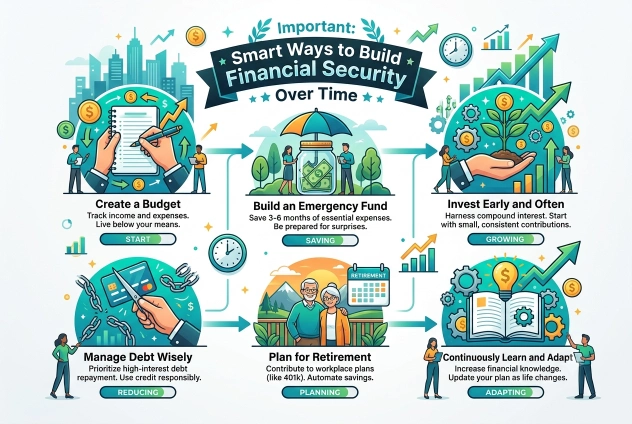
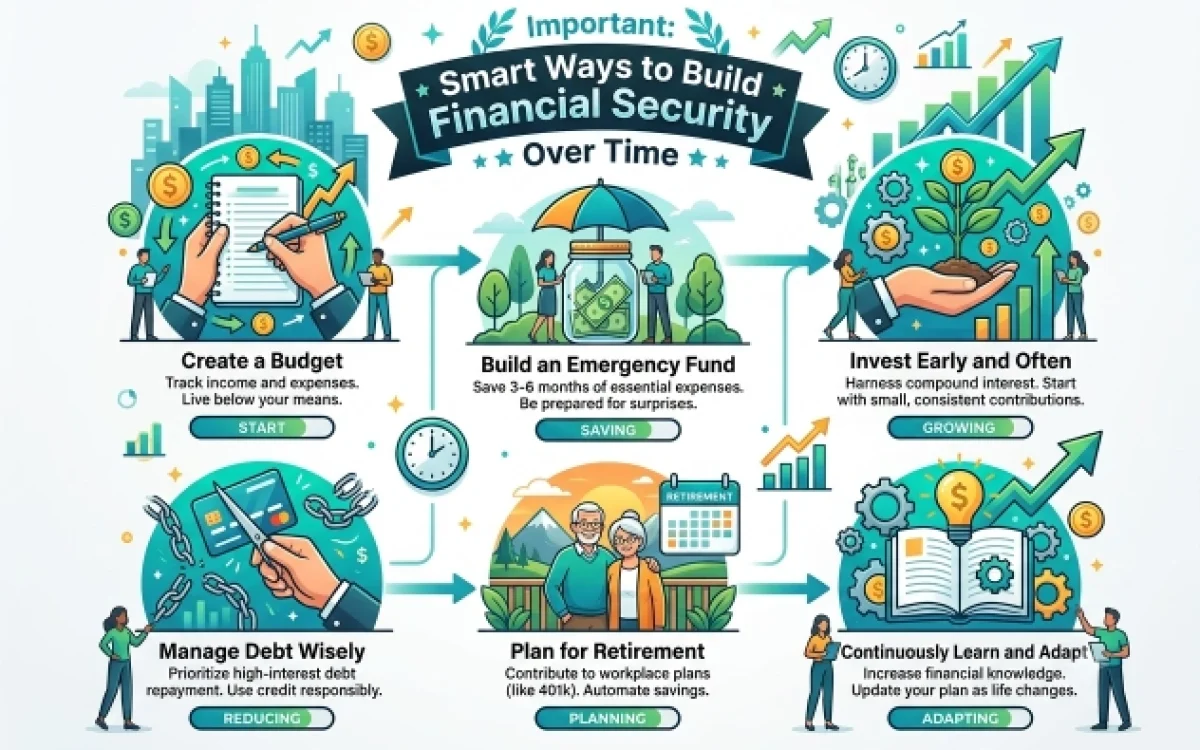
Financial security is not usually created through one major decision. It is generally developed through a series of consistent choices made over time. Building savings, managing debt, protecting income, planning for long-term goals, and spending thoughtfully can all contribute to greater financial stability.
Understand Your Financial Position
Before working toward financial security, understand where you currently stand. Make a simple list of your income, regular expenses, debts, savings, investments, and major financial obligations.
This overview can help you identify areas that require attention. For example, you may discover that high-interest debt is taking up a significant portion of your income or that you do not yet have enough emergency savings.
Knowing your starting point makes it easier to set realistic goals.
Build an Emergency Fund
Unexpected expenses can put significant pressure on finances. An emergency fund is designed to provide money for situations such as unexpected repairs, temporary income disruption, or other necessary expenses.
The amount needed will depend on individual circumstances. People with variable income or significant financial responsibilities may choose to maintain a larger reserve.
Keeping emergency savings separate from everyday spending can make it easier to avoid using those funds for nonessential purchases.
Manage High-Cost Debt
Debt can be useful in certain situations, but high-interest debt can become expensive when balances remain unpaid for long periods.
Make a list of outstanding debts, including balances, interest rates, and minimum payments. Continue meeting required payments while considering strategies for reducing expensive debt more quickly.
Reducing costly debt can free up money that can eventually be redirected toward savings and long-term financial goals.
Save Consistently
You do not necessarily need a large amount of money to begin saving. Regular contributions can help establish a financial habit.
Consider setting aside money automatically after receiving income. Automating contributions can reduce the temptation to spend money that was intended for savings.
Even when the amount is modest, consistency can help build financial discipline over time.
Set Specific Financial Goals
Saving becomes easier when you know what you are saving for. Instead of having one general goal such as “save more money,” identify specific objectives.
These might include building an emergency fund, purchasing a home, funding education, preparing for retirement, starting a business, or taking a major trip.
Assigning an approximate amount and timeframe to each goal can make progress easier to measure.
Consider Long-Term Investing
Once basic financial needs and emergency savings are being addressed, some people consider investing for long-term goals.
Investments can involve risk, and different products have different levels of risk, potential returns, costs, and time horizons. Understanding these factors is important before investing.
Diversification and aligning investments with your goals and risk tolerance can be important considerations. Financial circumstances differ, so professional advice may be appropriate for more complex situations.
Protect Your Financial Progress
Financial security is not only about accumulating money. Protecting your income, assets, and family from significant financial setbacks can also matter.
Depending on individual circumstances, appropriate insurance coverage may help manage certain risks. Health, life, property, vehicle, or other forms of insurance may be relevant to different households.
The objective is to consider which risks could create serious financial difficulties and plan accordingly.
Avoid Lifestyle Inflation
As income increases, it can be tempting to increase spending at the same pace. While enjoying some improvements in lifestyle is reasonable, directing part of an income increase toward savings or investments can strengthen long-term financial stability.
For example, when receiving a raise, you might allocate part of the additional income to savings before increasing discretionary spending.
Develop Strong Financial Habits
Financial security often depends on everyday behavior. Reviewing expenses, paying bills on time, avoiding unnecessary debt, maintaining savings, and regularly checking financial goals can all contribute to better money management.
It can also be useful to review subscriptions and recurring expenses periodically. Canceling services that are no longer needed can free up money without requiring major lifestyle changes.
Continue Learning About Money
Financial knowledge can improve decision-making. Learn about budgeting, interest rates, taxes, investing, insurance, retirement planning, and different types of financial products.
Before making a major financial decision, compare costs, understand the terms, and consider the potential risks. Avoid making decisions solely because something is popular or promises unusually high returns.
Review Your Financial Plan Regularly
Financial priorities change over time. A plan that works when someone is single may need to change after marriage, starting a family, buying a home, changing careers, or approaching retirement.
Review your financial position periodically and update goals when circumstances change. Regular reviews can help ensure that savings, spending, debt management, insurance, and investments remain aligned with current priorities.
Conclusion
Building financial security is a long-term process rather than a quick achievement. Creating an emergency fund, managing expensive debt, saving consistently, setting clear goals, considering appropriate investments, and protecting against major financial risks can help establish a stronger foundation. Most importantly, financial progress does not require perfection. Consistent habits, informed decisions, and regular reviews can gradually improve financial stability and provide greater confidence about the future.