
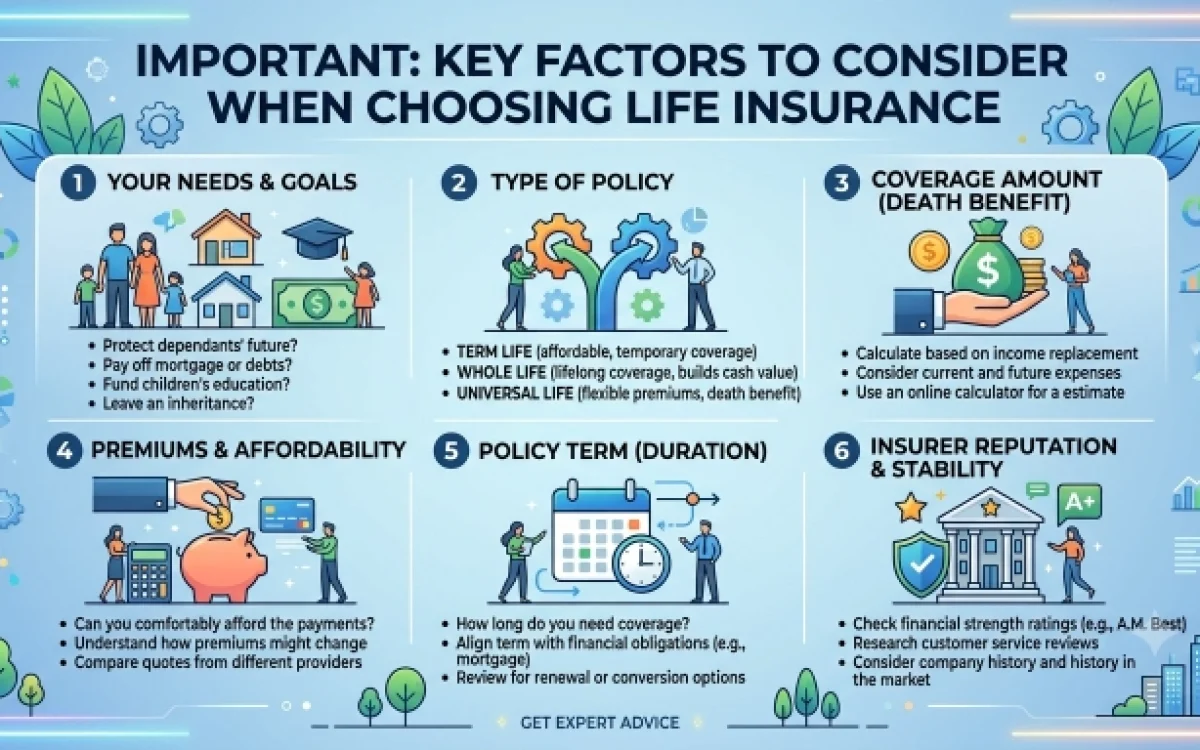
Life insurance can be an important part of financial planning for people who have dependents, financial responsibilities, or long-term obligations. Its primary purpose is generally to provide financial support to designated beneficiaries after the insured person’s death, according to the terms of the policy.
Choosing life insurance requires more than simply comparing premium prices. The appropriate policy depends on factors such as financial responsibilities, coverage requirements, policy duration, exclusions, premiums, and the needs of beneficiaries.
Understand Why You Need Life Insurance
The first step is identifying the purpose of the coverage. Someone with a spouse, children, dependent parents, or significant debts may have different insurance needs from someone without financial dependents.
Life insurance may be used to help provide financial support to family members, cover certain liabilities, support children’s education, or protect long-term financial plans.
Understanding the purpose of the policy can help determine how much coverage and what type of policy may be appropriate.
Determine the Required Coverage Amount
The amount of life insurance needed depends on personal circumstances. Consider regular household expenses, outstanding loans, children’s future education costs, existing savings, investments, and other financial responsibilities.
One useful approach is to estimate how much money dependents might require if the insured person’s income were no longer available.
Existing assets and other insurance policies should also be considered because they may already provide some financial support.
Consider the Policy Duration
Life insurance policies can have different durations. Some provide coverage for a specific period, while others may be designed for longer-term or permanent coverage depending on the product and jurisdiction.
The appropriate duration depends on the purpose of the insurance. For example, someone primarily concerned about supporting children until they become financially independent may have different needs from someone seeking lifelong financial planning.
Compare Premium Costs
Premium affordability is an important consideration. A policy may provide substantial coverage, but if premiums are difficult to maintain over time, the policy may not serve its intended purpose.
Compare premiums alongside the coverage and benefits offered rather than choosing solely based on the lowest price.
Also check whether premiums are fixed or can change according to the policy terms.
Understand Policy Features
Different life insurance products can have different structures and features. Some may primarily provide a death benefit, while others may include additional components or options.
Before purchasing, read the policy documents carefully and understand what the policy actually provides.
Avoid assuming that two policies with similar coverage amounts are identical. Their conditions, exclusions, charges, benefits, and other features may differ.
Check Exclusions and Conditions
Insurance contracts include conditions that determine when benefits are payable and circumstances that may be excluded.
Review these details carefully. Understanding exclusions and policy conditions can help beneficiaries avoid unexpected complications during a claim.
If any clause is unclear, ask the insurer or a qualified insurance professional for an explanation before purchasing.
Review Beneficiary or Nominee Details
The person or persons designated to receive policy proceeds should be recorded correctly according to the applicable rules.
Life circumstances can change, so beneficiary or nominee information should be reviewed after major events such as marriage, divorce, the birth of a child, or other significant family changes.
Keeping policy records updated can make administration easier for family members.
Consider Inflation and Future Expenses
The amount of coverage that seems sufficient today may not provide the same purchasing power years later.
When estimating financial needs, consider future expenses such as education, housing, household costs, and other long-term obligations.
Inflation is one reason why simply replacing today’s expenses without considering future costs may result in inadequate planning.
Evaluate the Insurer and Service
The insurance provider also matters. Consider factors such as the insurer’s reputation, policy documentation, customer support, claim procedures, and regulatory standing.
Review official policy information rather than relying entirely on advertisements or informal recommendations.
Understanding how claims are submitted and what documentation may be required can also be useful.
Be Honest When Providing Information
Accurate information is essential when applying for life insurance. Details about age, occupation, lifestyle, existing medical information, and other requested factors should be provided accurately.
Incorrect or incomplete information can create complications during underwriting or a future claim.
If you are uncertain about what needs to be disclosed, ask the insurer for clarification rather than making assumptions.
Review Your Coverage as Life Changes
Insurance needs can change as income, debts, family responsibilities, and financial goals evolve.
A person who purchases life insurance early in their career may have different requirements after getting married, purchasing a home, having children, or taking on new financial responsibilities.
Reviewing coverage periodically can help determine whether the policy still matches current needs.
Avoid Choosing Only on Price
A low premium may appear attractive, but price alone does not determine whether a policy is suitable. Coverage amount, duration, exclusions, conditions, benefits, and service should all be considered.
Comparing policies based on several factors provides a clearer picture of what each option actually offers.